
★★★★★
Three-inch drop at the apron going into the garage. We had been parking on the street for six months because of the bump. Slabsmith lifted it in one morning and it drives smooth. I should have called a year earlier.
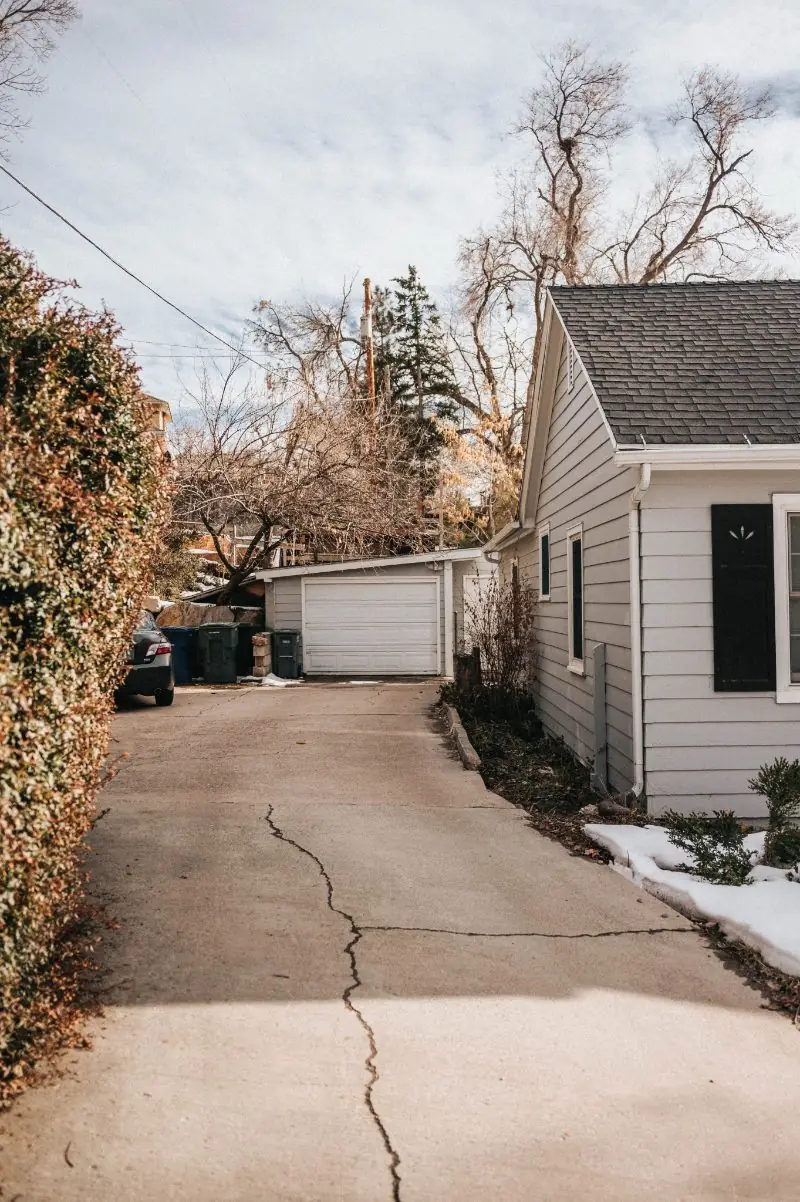
A driveway that has settled at the garage, sidewalk, or street can be leveled without automatically replacing the whole surface. Driveway leveling restores smoother vehicle access, reduces jarring edges, and helps guide water away from vulnerable areas.
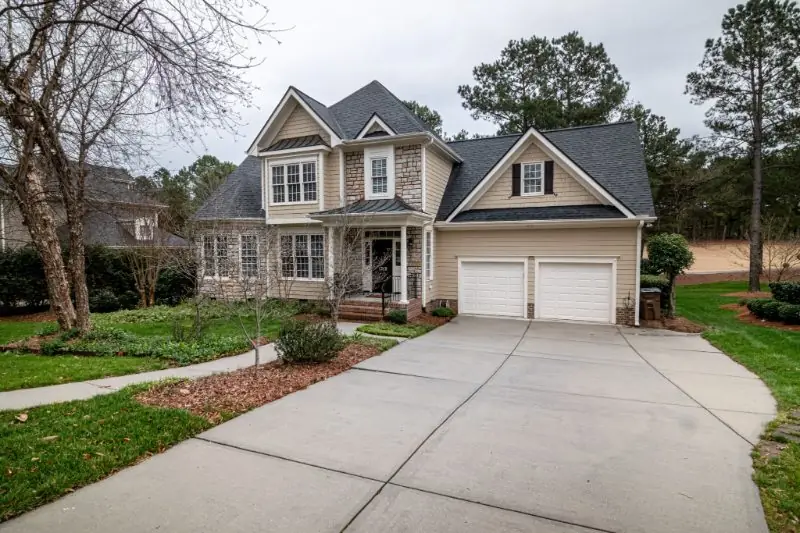
A driveway should feel smooth when you pull in, back out, or walk to the front door. When one panel drops, the change in height can cause a hard bump at the garage, an awkward edge at the sidewalk, or a low spot that collects water. Concrete driveway leveling raises settled sections of sound concrete rather than replacing the entire drive. You get a more even approach that is easier on vehicles, safer to walk across, and better suited to everyday use.
Settlement often shows up first where the driveway meets the garage floor, public sidewalk, or curb. In Omaha, spring moisture, summer storms, and winter freeze-thaw movement can affect the soil beneath concrete, especially where runoff is concentrated. Look for widening joints, standing water after rain, tire marks at a sharp edge, or a panel that has pulled away from the garage. Driveway heaving, where a panel has been pushed up rather than dropped, looks similar from a distance but calls for a different fix, so it is worth confirming which one you have. These signs are worth investigating before unevenness affects more sections of the drive.
Drainage deserves close attention because water is often the reason a driveway panel loses support. Downspouts that empty near the drive, grading that funnels runoff toward a joint, and erosion along the edge can leave voids underneath. Around Benson, Millard, and the streets near Lake Zorinsky, different lots can have very different runoff patterns. We look beyond the visible dip to identify how water and base conditions may be contributing to the settlement.
The work begins with an assessment of the concrete's condition, the amount of movement, and nearby features such as garage walls, sidewalks, and landscaping. We mark low areas, create small access points, and introduce material beneath the slab in gradual, controlled lifts. Throughout the process, we track the panel height and alignment with adjoining concrete. The access points are finished after leveling, and we walk you through the completed surface and any drainage improvements worth considering.
Leveling is especially useful when the driveway concrete has a sound surface but an uneven base. It avoids the noise, debris, and extended access limits associated with removing a full panel, and many driveways can return to service quickly once the work is complete. In Omaha, restoring the right slope can help reduce puddling near the garage and improve the way runoff leaves the driveway. Exact results depend on the slab layout, cracking, and the source of the settlement.
Slabsmith Concrete Lifting helps local residents make practical decisions about settled concrete. Our approach is based on a careful inspection, clear communication, and precise work rather than pushing a replacement when lifting can be a sensible option. We respect the role your driveway plays in daily routines, from school mornings to unloading groceries in rough weather. You can expect an honest explanation of the options before any work moves forward.
A rough driveway transition does not have to become the new normal. Getting the settlement evaluated now can help protect access, reduce trip concerns, and give you a clearer plan for drainage. Driveway leveling cost is quoted on site, because the volume of material the void takes is what moves the price, and driveway leveling with foam is often the better fit where the base is weak. If you have been searching driveway leveling near me, contact us to arrange driveway leveling in Omaha and bring your concrete back into better alignment.
Frequently Asked Questions
Straight answers about levelling a settled concrete driveway in the Omaha metro.
You fix an uneven concrete driveway either by lifting the settled panels back into line or by removing and repouring them, and lifting is the first thing to consider whenever the concrete itself is still sound. Small holes are drilled through the low panel, material is pumped underneath to fill the void and carry the load, and the slab is raised back toward the height of the panels around it.
Replacement is the right call when the panel is broken into several pieces, crumbling through to the aggregate, or so thin it will not survive being lifted. The decision is about the condition of the concrete, not the size of the drop.
Before either option, it is worth knowing why the panel dropped. If a downspout is emptying at the edge of the driveway, the same void will open again under a new pour.
Injection lifting, either mudjacking or polyurethane foam, is by a wide margin the least disruptive option. There is no demolition, no forming, no waiting on a new pour to cure, and the driveway is normally back in use the same day.
A typical panel takes a few hours from setup to patched holes. The main variables are how many panels are involved, how far they have to come up, and whether a pump and hose can reach the work.
The transition at the garage needs care, because the finished height has to work with the garage floor and the door clearance rather than just matching the panel beside it. We check that before lifting rather than after.
The usual list, roughly in order of how often we see it:
These separate into two groups that need different repairs. Settlement is a support problem and lifting addresses it. Scaling and spalling are surface problems, and no amount of lifting improves them.
We quote it after looking at the driveway, because the void underneath is what drives the price and you cannot see it from the surface. The same visible drop can mean a small pocket or a large washed out cavity.
What moves the number:
Mudjacking generally costs less per unit of material than foam, which is why it stays popular on driveways over solid ground. That does not always make it the cheaper job, since a large void takes a lot of grout. On both methods, lifting normally sits well below the cost of removing and repouring the same area, which is the honest reason most people choose it.
No. Lifting fixes the support under the slab, not the slab itself. Where a crack has opened because one side dropped, raising that side brings the two faces back into plane and the crack closes to something like a normal joint that can then be sealed. The crack line stays visible.
Cracks that came from surface wear, salt damage or a slab poured too thin are not settlement problems and lifting will not improve them. During the assessment the crack pattern is a good clue about which of the two you have.
Most residential driveways are a single visit measured in hours rather than days. Polyurethane foam reaches working strength within roughly fifteen minutes, so vehicles are often back on it the same day. Cement based grout needs longer, and the crew will give you a specific hold time for your job.
Either way, wait for the crew to confirm the surface is ready rather than guessing. Compare that with replacement, where a new pour is off limits to vehicles for several days at least.
Not in any way that lasts. Raising a slab means putting material under it at controlled pressure, in the right sequence, while watching how the concrete responds. Too much pressure in the wrong spot cracks the panel, and an unfilled void behind the lift means the slab drops again.
What you can sensibly do yourself is the water management: extend downspouts away from the driveway, keep joints sealed, and clear debris out of drainage paths. That work is cheap, it is genuinely useful, and it makes any lift last longer.
Self levelling compound sold for interior floors is not a driveway product. Poured on top of an exterior slab it adds surface material without touching the void underneath, and it does not hold up to freeze thaw and traffic.
A well built residential concrete driveway commonly lasts several decades, and many in older Omaha neighbourhoods are still serviceable well past that. Base preparation, drainage and salt exposure matter more to that number than the age on the paperwork.
Settlement is not the end of that life. A driveway that has dropped is usually a driveway with a void under it, and lifting returns it to service without spending the cost of a new pour. Keeping water away from the edges and joints afterwards is what protects the years you have left.
We carry General Liability and Workers' Compensation insurance and hold a Nebraska contractor registration. You are protected against job-site accidents and unfinished work, and you are dealing with a local business, not a crew passing through.
Omaha's clay soils swell when wet, shrink in drought, and heave during freeze-thaw cycles. Our crews know where subsurface water collects in your neighborhood, so we treat the cause, not just the symptom.
Every job starts with a free, no-pressure inspection and a line-item quote. If the slab is too deteriorated or the base is washed out, we say so. We recommend replacement when lifting is not the right call, because a short-term patch wastes your money.
Most residential lifts are finished in one day. We inject lightweight polyurethane foam that cures fast and leaves no ruts from heavy equipment. You can park or walk on the slab within hours of completion.
Concrete lifting and leveling in Omaha is regulated by the City of Omaha Permits and Inspections Division. Most residential driveway, patio, and walkway repairs require a building permit. Work touching the public sidewalk or curb line also requires a right-of-way permit. Permit fees for minor flatwork typically run from $50 to $100 depending on project size and location, and simple residential reviews usually take 1 to 5 business days. We check your exact scope, prepare the application, and pull the required permit before work begins.
Omaha averages about 30.6 inches of precipitation per year, and winter lows often reach 13 degrees F. Repeated freeze-thaw cycles and clay soil expansion cause slabs to move, crack, and lose support. Wet springs add water to voids under concrete, while dry summers shrink the soil and make leveling less predictable when drainage is poor.
We find April, May, early June, September, and October to be the most reliable windows for polyurethane foam lifting. Soil is workable and not saturated during those months. Lifting is possible in summer, but dry clay may require more material. We will tell you if waiting or replacing is the better value for your situation.
Get a clear, site-specific recommendation from a team that knows Omaha concrete conditions. Contact us today to arrange your free estimate and discuss the right next step.
(402) 625-4920Or fill out the form and we'll be in touch shortly.
Customer Reviews
Three-inch drop at the apron going into the garage. We had been parking on the street for six months because of the bump. Slabsmith lifted it in one morning and it drives smooth. I should have called a year earlier.
They fixed the panel and mentioned offhand that the downspout emptying right next to the apron was probably why it moved in the first place. Nobody had ever pointed that out. We redirected the downspout and the driveway has been level since.
Slabsmith assessed each panel separately. Two came up fine. The third they said was past the point where lifting would hold and I should get it replaced. I appreciate that they told me the truth instead of lifting something that was going to fail.