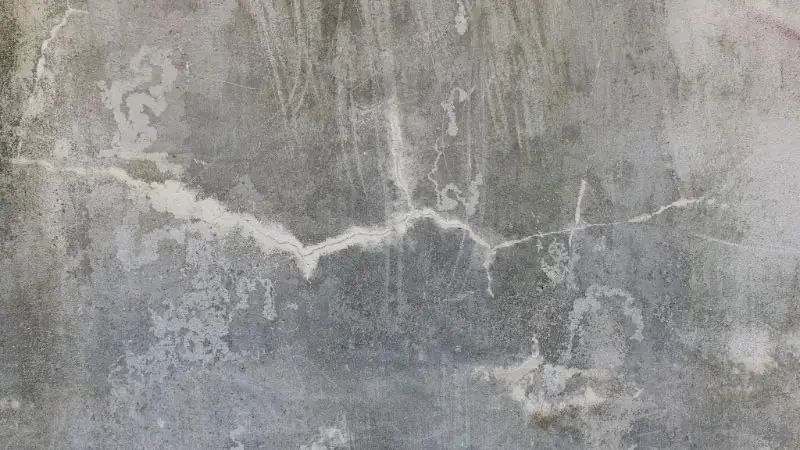
Garage slabs sit on backfill and carry vehicle weight. When they drop you get a step at the house door, a crack across the middle, and water coming in from the apron.
A settled garage floor announces itself in a few specific ways. There is a lip at the door into the house that was flush when you moved in. A crack runs across the slab and one side of it sits lower than the other. Water that used to stay outside now runs in from the driveway apron and pools at the back wall. Tap a low area and it sounds hollow, because there is air under it rather than soil. Leveling a garage floor deals with that void directly rather than covering it over.
The cause is the same one behind most settled concrete in this metro. A garage floor is poured on backfill inside the foundation walls, and backfill is the loosest material on the property. It keeps consolidating for years after the house is finished. Add the weight of two vehicles parked in the same spots every day and the slab has both a soft base and a real load working on it.
The apron deserves its own attention, because it is where most garage water problems start. The apron is the section of concrete between the driveway and the garage floor, and if it has dropped even slightly the joint at the door now slopes inward. Every rain and every snowmelt then delivers water across the threshold instead of away from it. Lifting the apron back up is often the single change that dries the garage out.
Polyurethane foam is usually the better method inside a garage. It is light, so it adds very little load to backfill that is already struggling. It cures in minutes rather than hours, which means you are parking on the floor the same day. It also needs much smaller holes and creates far less mess in an enclosed space. Mudjacking can be done in a garage, but it is heavier, wetter and slower to cure, so we generally reserve it for exterior slabs.
Cracked garage floors are common and they are not automatically a reason to replace the slab. If the concrete on both sides of a crack is sound, the crack is simply where the slab broke when the support under it disappeared. We lift both sides evenly so the two halves come back into the same plane, then the crack can be sealed. What we cannot do is make a crack disappear, and we will say so plainly at the estimate.
Getting ready is simple. Clear the floor area we will be working on, move vehicles out for the visit, and give us access to the apron. Most residential garage floors are a single visit. We will walk the slab with you first, show you where it has dropped and by how much, and explain what the finished result will realistically look like before anything is drilled.
There is a point where lifting stops being the right answer. A floor that is badly spalled from years of de-icing salt dripping off vehicles, or a surface that crumbles when you scrape it, is a slab at the end of its service life. Raising it will make it level and it will still be flaking next spring. In that situation we will tell you replacement is the honest recommendation. Garage floor leveling cost is quoted after we have seen the slab, since the volume of material the void takes is the real variable, and leveling a sloped garage floor is priced the same way. If you have been searching garage floor leveling near me, we handle concrete garage floor leveling throughout the Omaha metro.
Straight answers about lifting a settled garage floor or apron in the Omaha metro.
How can I level an uneven concrete garage floor?
A settled garage floor is levelled by injecting material under the slab through small holes and raising it back into plane, and polyurethane foam is normally the best way to do it. Foam is light, so it does not add load to the backfill that failed in the first place, it needs small holes, and it reaches working strength in about fifteen minutes.
The work is usually a single visit. Vehicles need to be out and the areas being lifted need to be clear, but shelving and storage along walls we are not working under can normally stay put. We will tell you exactly what has to move when we look at the floor.
Cement based mudjacking can be used on a garage slab, but it is heavier and needs longer to cure, which is why foam is the usual recommendation here.
Can you level a sloped garage floor?
Yes, if the slope came from settlement. Most garage floors are poured with a deliberate fall toward the door so water off vehicles drains out. When a slab drops at one corner or along the apron, that intended fall turns into a slope in the wrong direction, and lifting the low side restores it.
What lifting will not do is redesign a floor that was built with a slope you dislike but which is doing its job. And if the slab is broken into pieces that move independently, raising them into one plane is not realistic. We check which of those you have before quoting.
Why is my garage floor lower than my house?
They were built on different things. The house sits on footings below the frost line and stays put. The garage slab, and especially the apron in front of it, sits on backfill and fill soil that was placed during construction and keeps consolidating for years afterwards.
Add water from a downspout, a driveway that drains the wrong way, or roof runoff at the corner of the garage, and fines wash out from under the slab. The floor drops, the threshold that used to shed water starts to slope inward, and water begins running into the garage on heavy rain when it never used to. That change in the water is often what people notice before they notice the settlement itself. Lifting the apron and the front of the slab back to a positive slope normally solves it.
How much uneven floor is acceptable?
There is no universal number, and anyone giving you one without seeing the slab is guessing. What counts as acceptable depends on what the slab has to do: a floor that only parks vehicles tolerates more variation than one you want to run a cabinet or a lift on, and a slab that drains to the door has to keep enough fall to do that.
The questions worth asking instead: does water still run out rather than in, is the drop causing a lip at the threshold or at a crack, is anything you park or store on it sitting badly, and is the movement still happening. If the answer to the last one is yes, the size of today's offset matters less than the fact that it is growing.
If you need a tolerance for a specific installation, the equipment manufacturer or the relevant building requirement is the place to get it.
How much does it cost to level a garage floor?
We price it from an on-site look, because the void under the slab is what the number turns on and you cannot see it through the concrete.
What drives cost:
Area being raised and how far it has to come up
Volume of material the void takes
Method, since foam and cement grout price differently per unit
Whether the apron and driveway transition are included
Access and how much has to be moved out of the way
The cheapest genuine option is almost always lifting rather than replacement, because you keep the slab and there is no demolition, disposal or new pour. Interior self levelling compound is cheaper per bag but it is not a fix for a settled slab: it adds a thin layer on top while the void underneath stays exactly where it is. Grinding a high spot is another low cost option, but it only applies to a small localised lip.
My garage floor has a big crack with one side lower. Can that be lifted?
Usually yes. A crack like that is normally where the slab broke after the support underneath washed out or settled. If the concrete on both sides is still sound, we lift the low side back into plane with the high side, the crack closes to about a normal joint width, and it can then be sealed.
If the concrete itself is crumbling along the crack, or the slab has broken into several pieces that no longer act together, lifting is not the answer and we will say so rather than take the job.
Can I level my garage floor myself?
Not the settlement. Raising a slab means pumping material into a void at controlled pressure while reading how the concrete responds, and getting it wrong cracks the floor or leaves a cavity that lets it drop again. It is not a rental equipment job.
What you can do yourself is the water. Extend downspouts past the apron, make sure the driveway and grade fall away from the garage, and seal the joint where the apron meets the slab. That is the work that stops the void reopening.
Self levelling compound has a real use on interior floors that are sound but slightly out of plane. It is not a repair for a slab that has dropped, and on a garage floor exposed to vehicles, salt and freeze thaw it is a poor investment.
How soon can I park on a leveled garage floor?
With polyurethane foam the material reaches working strength within about fifteen minutes, so vehicles usually go back in the same day and often within the hour. Mudjacking uses a cement based slurry that needs longer, which is one of the reasons foam is normally the better fit for a garage.
The crew will confirm the specific hold time for your job before they leave. Compare either with replacement, where a new slab is off limits to vehicles for several days.
Why Omaha Homeowners Choose Slabsmith for Garage Floor Leveling
Licensed, Insured and Accountable
We carry General Liability and Workers' Compensation insurance and hold a Nebraska contractor registration. You are protected against job-site accidents and unfinished work, and you are dealing with a local business, not a crew passing through.
Omaha Soil Smarts
Omaha's clay soils swell when wet, shrink in drought, and heave during freeze-thaw cycles. Our crews know where subsurface water collects in your neighborhood, so we treat the cause, not just the symptom.
Straight Talk, No Upsell
Every job starts with a free, no-pressure inspection and a line-item quote. If the slab is too deteriorated or the base is washed out, we say so. We recommend replacement when lifting is not the right call, because a short-term patch wastes your money.
Same-Day Results
Most residential lifts are finished in one day. We inject lightweight polyurethane foam that cures fast and leaves no ruts from heavy equipment. You can park or walk on the slab within hours of completion.
How Our Garage Floor Leveling Process Works
You call or book online. Our team answers during business hours. We ask for your address, the type of concrete trouble, and a few photos if you have them. Most Omaha metro calls receive a free inspection appointment within 24 to 36 hours, often the next day.
We inspect your concrete. The owner or a senior technician visits your property to assess settled slabs and check for the expansive clay soil that causes Nebraska foundations to shift. The evaluation takes about 45 minutes. If we see full-depth cracks or severe deterioration, we will tell you replacement is the smarter investment.
You get a clear, fixed-price quote. We email a fixed-price proposal the same day, covering all drilling, material, labor, patching, and cleanup. No surprise fees. We do not push for a signature on the spot.
We lift and level the concrete. Our crew drills small, penny-sized holes and injects polyurethane foam or grout to raise the slab back to proper grade. We fill the injection holes and seal visible cracks. You can walk on the surface right away.
We clean up and stand behind the work. We wash down the area, remove all debris, and leave the site clean. If you have any concerns after the lift, call us and we return to assess at no charge.
Omaha Permits and Building Codes
Concrete lifting and leveling in Omaha is regulated by the City of Omaha Permits and Inspections Division. Most residential driveway, patio, and walkway repairs require a building permit. Work touching the public sidewalk or curb line also requires a right-of-way permit. Permit fees for minor flatwork typically run from $50 to $100 depending on project size and location, and simple residential reviews usually take 1 to 5 business days. We check your exact scope, prepare the application, and pull the required permit before work begins.
Omaha averages about 30.6 inches of precipitation per year, and winter lows often reach 13 degrees F. Repeated freeze-thaw cycles and clay soil expansion cause slabs to move, crack, and lose support. Wet springs add water to voids under concrete, while dry summers shrink the soil and make leveling less predictable when drainage is poor.
We find April, May, early June, September, and October to be the most reliable windows for polyurethane foam lifting. Soil is workable and not saturated during those months. Lifting is possible in summer, but dry clay may require more material. We will tell you if waiting or replacing is the better value for your situation.
Put Your Concrete Concern In Motion
Get a clear, site-specific recommendation from a team that knows Omaha concrete conditions. Contact us today to arrange your free estimate and discuss the right next step.
Or fill out the form and we'll be in touch shortly.
Get a Free Quote
Customer Reviews
What Omaha Homeowners Say
★★★★★
Two years of water in the garage after rain. Checked the door seal, the gutters, the foundation crack. Never thought to look at the floor slope. Slabsmith leveled the floor and the water drains out the door instead of pooling at the back wall. Should have called sooner.
★★★★★
There was a step at the house door that appeared gradually over a few years. We just lived with it. Slabsmith confirmed the slab had settled and lifted it back. Took longer to explain than to fix.
★★★★★
Crack across the middle of the garage floor with one side sitting about an inch lower. I thought that meant replace the whole floor. Slabsmith lifted the lower side, filled the crack, and the floor is flat. Cost about a third of what replacement quotes came in at.